Technology
Why Every Humanoid Robot Uses the Same Kind of Motor Now
The actuator inside each robot joint determines everything from payload capacity to human safety. Here is how quasi-direct drive electric actuators became the dominant architecture in commercial humanoid robotics.
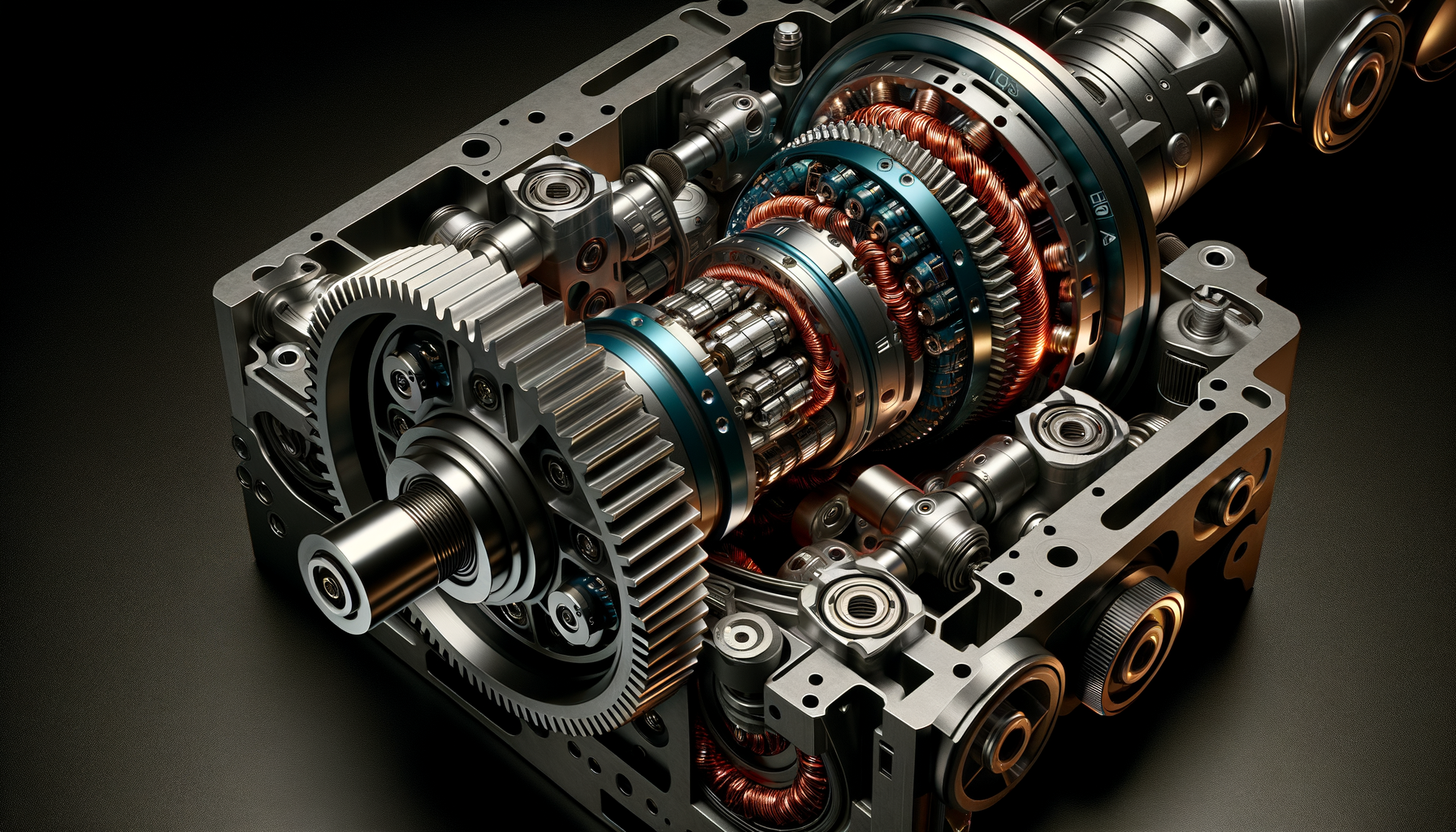
The joint is where everything either works or fails in a humanoid robot. A knee that can absorb a stumble and recover, a hip that transmits force without breaking under load, a shoulder that handles the torque of lifting a 10-kilogram part: all of these capabilities ultimately trace back to the actuator inside each joint. Over the last four years, the dominant actuator architecture in commercial humanoid robots has shifted decisively toward a class of motors called quasi-direct drive, or QDD, and the shift explains much of why robots like Figure 02, Tesla Optimus, and the new-generation Boston Dynamics Atlas behave so differently from the hydraulic machines of the previous decade.
The actuator choice ripples through everything else: power consumption, payload capacity, safety in human proximity, fall recovery behavior, manufacturing cost, and the type of AI training that works in simulation. Understanding how these joints work, and why certain design choices matter, provides the foundation for interpreting almost every performance claim in the humanoid robot market.
 AI-generated image
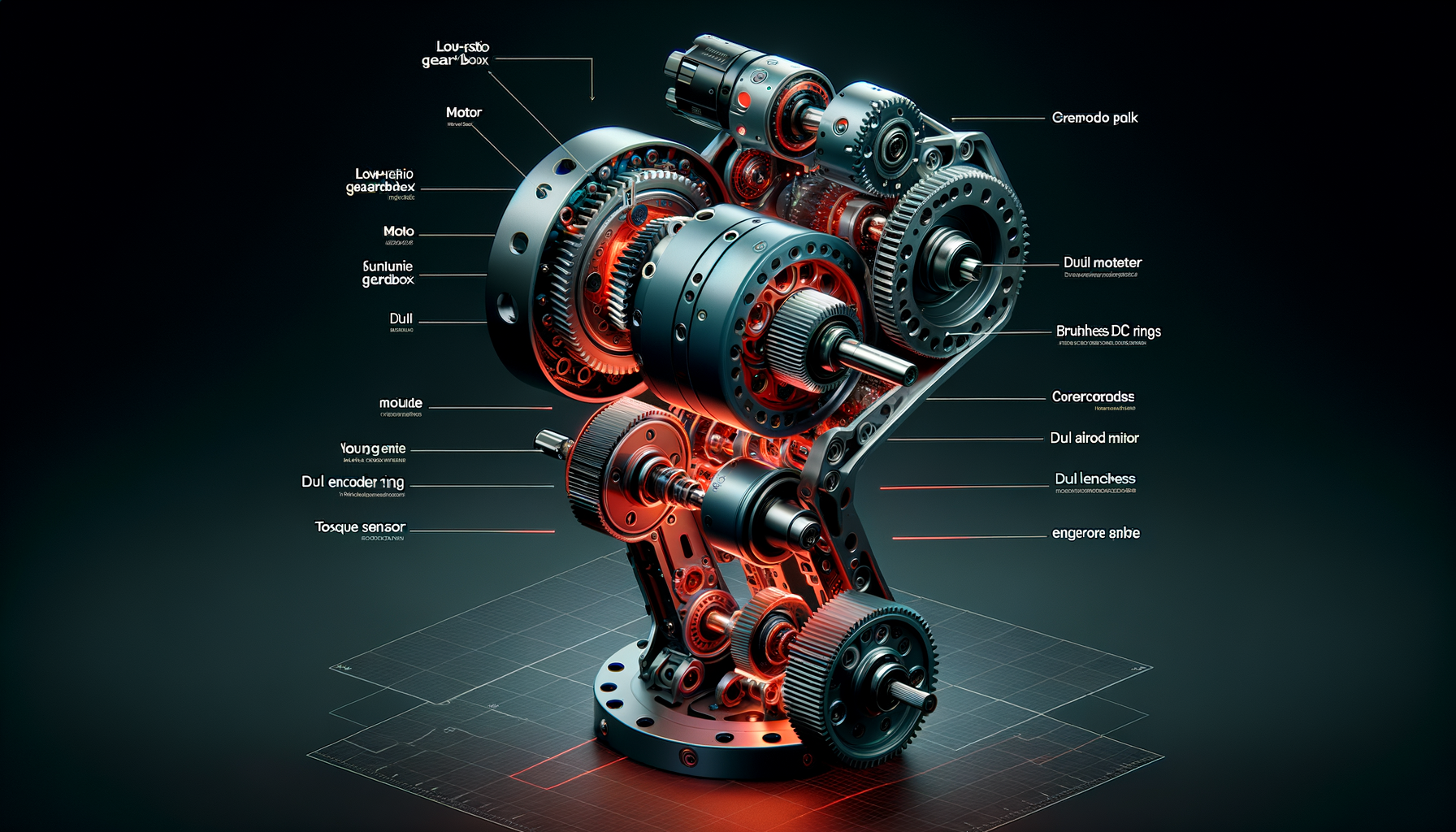
A quasi-direct drive actuator module contains a BLDC motor, low-ratio cycloidal gearbox, dual encoders, and integrated force sensing in a compact package. Credit: AI illustration
Key Stats
5:1–20:1
Typical QDD gear ratio range
1–2 kHz
Torque control bandwidth
$512M
Humanoid actuator market by 2032
100–200 Nm/kg
Typical QDD torque density
The Actuator Problem in Humanoid Robotics
An actuator converts electrical power into mechanical motion at a joint. In principle this is simple: a motor spins, and a gear train converts that rotation into the torque and speed combination needed for the joint. In practice, humanoid robots place demands on actuators that are extraordinarily difficult to satisfy simultaneously.
The requirements include high torque density (the ability to produce large forces from a small, light package), backdrivability (the ability to be pushed backward by an external force without resistance), impact tolerance (surviving falls and unexpected collisions without mechanical failure), precise force sensing (knowing exactly how hard the joint is pushing against the world), and efficiency (not burning through a battery pack in 45 minutes of work). Most conventional actuator designs optimize for one or two of these properties at the expense of the others.
⚡ High-Ratio Geared Actuators
Use gear ratios of 100:1 or higher to amplify motor torque. Very high torque output from a small motor, but essentially impossible to backdrive. The reflected inertia of the motor through the gearbox feels like a brick wall to anything pushing against the joint. Common in industrial robots and early service robots.
🔧 Direct Drive Actuators
No gearbox at all. The motor shaft is the joint shaft. Perfectly backdrivable, zero backlash, highly compliant. The problem: to produce useful joint torques in a human-scale robot, direct drive motors have to be enormous and heavy. Power-to-weight ratio is poor for most dynamic tasks.
💧 Hydraulic Actuators
Used in Boston Dynamics Atlas (original), NASA JSC Valkyrie, and other research platforms. High force density and good compliance, but require a pump, fluid reservoir, hoses, seals, and heat management. Heavy, complex, leak-prone, and difficult to scale to smaller robots.
⚙️ Quasi-Direct Drive (QDD)
Low gear ratio (5:1 to 20:1) paired with a high-torque BLDC motor. Balances backdrivability with torque density. The dominant choice in 2024-2026 commercial humanoids. Adds force sensing and high-bandwidth current control to achieve compliant, aware joints without hydraulics.
Under the Hood: How QDD Actuators Work
A quasi-direct drive actuator typically consists of three main components: a brushless DC (BLDC) motor, a low-ratio gearbox (usually cycloidal or planetary), and an integrated sensing package. The BLDC motor is chosen for high torque density and efficient electronic commutation. Unlike brushed motors that use physical contact points for commutation, BLDC motors use three-phase current timing to create a rotating magnetic field, controlled by a motor driver at update rates of 1 to 2 kHz.
The gearbox amplifies motor torque by the gear ratio while reducing rotational speed proportionally. In a 10:1 ratio actuator, the joint moves at one-tenth the motor's speed but receives ten times its torque. What distinguishes QDD from high-ratio designs is the mechanical consequence of a low ratio: the reflected inertia of the motor as seen by the joint scales with the square of the gear ratio. A 10:1 actuator has 100 times less reflected inertia than a 100:1 actuator with the same motor. This is what makes QDD backdrivable: pushing against the joint feels like pushing against the rotor directly, not like pushing against a brick wall of inertia.
Cycloidal Gearboxes: The Preferred Reduction Stage
Most high-performance QDD actuators in humanoid robots use cycloidal gearboxes rather than standard planetary gears. In a cycloidal drive, an eccentric bearing drives a cycloidal disc that wobbles around the inside of a ring gear. The reduction ratio is set by the number of pins minus the number of lobes on the disc. Cycloidal drives offer several advantages for robotics: they can achieve ratios from 5:1 to 100:1 in a compact, single-stage package; they distribute load across many contact points simultaneously (typically 60 to 70% of the lobes engage at once), giving high torque density and long fatigue life; and they have inherently lower backlash than planetary gears of equivalent ratio.
 AI-generated image
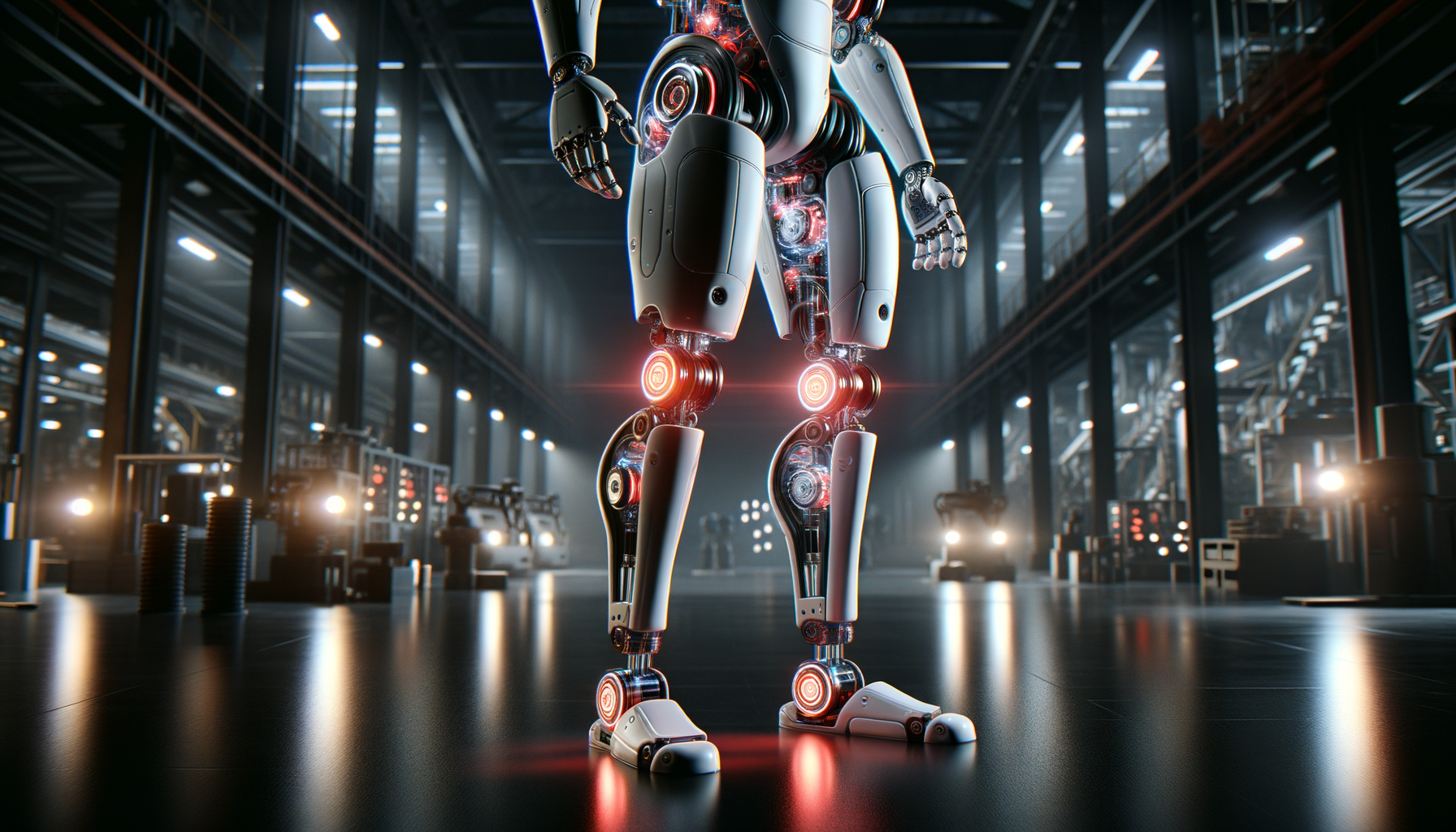
The internal actuator architecture of a humanoid robot leg, visible through a transparent housing, shows motor windings, gearbox housing, and integrated encoder rings. Credit: AI illustration
Force Control: How the Robot Knows What It Is Touching
The key capability that QDD enables, beyond backdrivability, is high-bandwidth force control. By monitoring the current flowing through the motor, the control system can estimate joint torque in real time without necessarily requiring a dedicated torque sensor. Motor torque is proportional to current (the torque constant, measured in Nm/A), so measuring current at 1 kHz gives a torque estimate at the same rate. More sophisticated implementations use dual encoders (one on the motor shaft, one on the output shaft) to measure deflection across a compliant element, which provides a direct torque measurement.
This force-awareness changes how a robot interacts with the world. A robot with impedance control based on force feedback does not just move to a position; it complies with external forces in a programmable way. If it bumps into a person at 0.5 meters per second, the joint yields rather than pushing through at full motor torque. This compliance is essential for safe operation around humans and for tasks requiring gentle contact, like placing an object on a surface without slamming it down.
| Actuator Type | Backdrivable? | Torque Density | Force Control | Complexity | Used In |
|---|---|---|---|---|---|
| High-ratio geared | No | High | Poor | Low | Industrial arms, early robots |
| Direct drive | Yes | Low | Excellent | Low | Research platforms |
| Hydraulic | Partial | Very high | Good | Very high | Original Atlas, Valkyrie |
| Quasi-direct drive | Yes | High | Excellent | Medium | Figure 02, Optimus, new Atlas |
| Series elastic | Yes | Medium | Good | Medium | Earlier Boston Dynamics designs |
Who's Building the Actuators
The humanoid robot actuator market has a distinct two-tier structure: a handful of companies building fully integrated robots that develop their own actuators in-house, and a growing ecosystem of specialized actuator module suppliers serving researchers and smaller robot builders.
• Figure AI: Designs proprietary QDD actuators for Figure 02. The company has not publicly disclosed specific specifications, but patents and teardown analyses suggest cycloidal-geared stages with integrated torque sensing. Figure has deployed 70 robots at BMW's Spartanburg plant as of early 2026.
• Tesla (Optimus): Uses custom rotary and linear actuators across the Optimus Gen 2 body, with 28 degrees of freedom. Tesla has emphasized the cost reduction potential from vertical integration: manufacturing actuators at automotive scale could drive unit costs toward $5,000 to $10,000 per robot for the full actuation system.
• Boston Dynamics (new Atlas): Made the full switch from hydraulic to electric QDD actuation in the commercial Atlas launched in 2024 for Hyundai factory pilots. The electric platform is quieter, lighter, and achieves comparable or better dynamic performance than the hydraulic original.
• Robstride: A Chinese actuator module company producing QDD modules from 5.5 Nm to 120 Nm peak torque (the ROBSTRIDE04 and ROBSTRIDE05 series). These off-the-shelf modules are used in multiple research humanoid platforms including the Berkeley Humanoid Lite and several startup projects.
• CubeMars: Produces the AK series QDD modules widely used in university and research robots. The 2024-2025 generation added cycloidal stages for higher torque density and improved shock tolerance.
• Agibot: The Q1 miniature humanoid (released December 2025) uses custom QDD joints to achieve full-body force control in a robot compact enough to carry in a backpack, demonstrating how far the technology has scaled down from earlier human-sized implementations.
What Actuator Design Means for Deployment
The actuator architecture a company chooses sets hard limits on what the robot can do and where it can be deployed safely. This is not just an engineering abstraction; it has direct commercial and regulatory implications.
Force control capability from backdrivable QDD joints is what allows humanoid robots to be certified for collaborative operation in spaces where humans are present. ISO TS 15066, the standard for collaborative robot operation, sets limits on contact force and pressure that a robot can exert on a human. A stiff, non-backdrivable robot has no way to comply with these limits except by moving extremely slowly. A QDD robot with impedance control can operate at useful speeds while staying within contact force limits because it yields rather than pushing through.
 AI-generated image
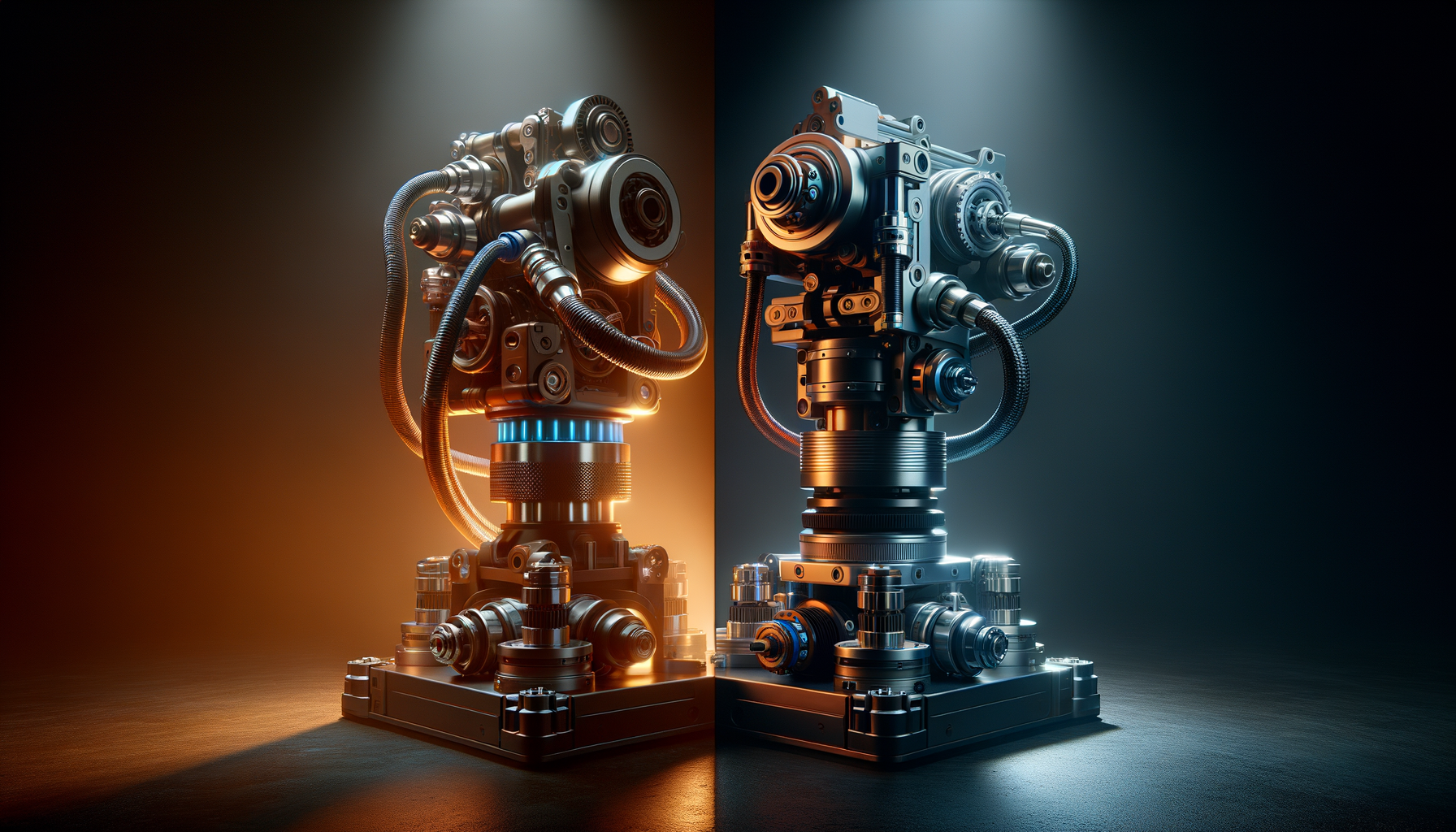
The shift from bulky hydraulic actuators to compact electric QDD modules is one of the defining hardware transitions in humanoid robotics over the past five years. Credit: AI illustration
Actuator quality also affects how well AI training transfers from simulation to real hardware. Reinforcement learning policies trained in physics simulators like Isaac Gym or MuJoCo make specific assumptions about joint compliance and force response. QDD actuators with known, consistent torque characteristics are much easier to model accurately in simulation than high-ratio geared joints with complex friction and backlash properties. Better sim-to-real transfer means policies that work in the real world on the first or second deployment attempt rather than requiring weeks of fine-tuning.
The Cost Curve Problem
Each high-quality QDD actuator module currently costs between $800 and $3,000 depending on torque rating and supplier. A humanoid robot with 28 to 45 joints needs $22,000 to $135,000 worth of actuators alone before any other components. This is a major reason why current humanoid robot prices are in the $70,000 to $200,000 range. Reaching the sub-$25,000 price point that most labor-cost-parity models require will demand either drastically cheaper actuator manufacturing or architectural changes that reduce joint count.
What's Coming Next in Actuator Technology
The 2026 to 2028 window will see several actuator advances move from research into production. Integrated motor-driver modules are shrinking the electronics and thermal management hardware that currently occupies significant volume outside the joint. Companies like Robstride and CubeMars are integrating the field-oriented control electronics directly into the motor housing, reducing wiring harness complexity and latency in the control loop.
Learning-based torque estimation is replacing or augmenting physical torque sensors in some platforms. Rather than using a dedicated sensor, these systems train neural networks on motor current, velocity, and position data to estimate contact forces with accuracy approaching dedicated sensor performance. This reduces component count and cost while maintaining the force-aware behavior that makes QDD joints useful.
Actuator market forecasts project the humanoid robot rotary actuator segment reaching $512 million by 2032. If humanoid deployment scales to the hundreds of thousands of units that several manufacturers are targeting for that timeframe, the actuator supply chain will need to industrialize rapidly, and the architectural choices being made today, particularly around cycloidal QDD as the standard configuration, will set the terms for that industrialization.
Frequently Asked Questions
Why did Boston Dynamics switch from hydraulic to electric actuators?
The hydraulic Atlas delivered exceptional dynamic performance but carried significant commercial liabilities: it was heavy, expensive, required fluid maintenance, leaked under stress, and was extremely difficult to manufacture at scale. The electric Atlas achieves comparable agility using QDD actuators, which are lighter, cheaper to manufacture, require no fluid management, and integrate more cleanly with the onboard computing and sensing stack. Boston Dynamics has stated the commercial platform is designed for Hyundai factory deployment, which requires reliability standards hydraulics could not practically meet.
What is the difference between a QDD actuator and a series elastic actuator?
Series elastic actuators (SEAs) achieve compliance and force sensing by placing a calibrated spring element between the motor/gearbox and the output shaft. Force is measured by deflection across the spring. QDD achieves compliance through low reflected inertia (no spring needed) and estimates force from motor current or dual-encoder deflection across a minimal compliance element. QDD offers higher bandwidth force control and less energy storage in the transmission, while SEAs provide more passive compliance and physical protection for the gearbox during impacts. Most current commercial humanoids have moved toward QDD architectures for bandwidth reasons.
How many actuators does a typical humanoid robot have?
Full-body humanoids typically have 28 to 45 degrees of freedom depending on how much capability is built into the hands. Figure 02 and Boston Dynamics Atlas are both in the 28 degree-of-freedom range for the body without advanced hand articulation. Adding dexterous hands with four or five fingers, each requiring multiple independent joints, can push the count above 50. Unitree's H1 uses a simpler design at around 19 degrees of freedom, trading dexterity for lower cost and simpler control.
Why does backdrivability matter for safety?
A non-backdrivable joint powered by a strong motor will push through an obstacle, including a human arm, with whatever force the motor can generate. There is no mechanical give. A backdrivable QDD joint with impedance control can be programmed to yield when contact force exceeds a threshold, behaving more like a compliant human limb than a rigid machine. ISO TS 15066 collaborative robot standards require demonstrable force limiting, which non-backdrivable robots can only achieve through very slow speeds. Backdrivability enables faster, more productive operation in human-shared spaces.
Can QDD actuators survive falls?
Shock tolerance depends on the specific design. Cycloidal QDD actuators handle impacts better than planetary gear equivalents because load is distributed across many contact points simultaneously. The low reflected inertia of the motor also helps: during an impact, less of the shock force is transmitted backward through the gearbox to the motor. That said, falls from standing height still impose very high peak forces, which is why most commercial humanoids include mechanical stops at joint limits and some degree of passive compliance in the structure. Figure, Agility Robotics, and Unitree all test fall recovery extensively as part of qualification.
The 12-Month Outlook
The QDD architecture is now the baseline for commercial humanoid robotics, but the next round of differentiation will come from how companies push the technology further. Higher torque density without increased weight, better integrated sensing, and lower cost per joint are the three axes of competition through the end of 2026.
Watch for Tesla's actuator cost announcements as Optimus Gen 2 production scales. Watch for Boston Dynamics' first commercial Atlas deployment data from Hyundai plants, which will provide the first large-scale real-world performance data for the new electric platform. And watch for the Chinese tier-two actuator suppliers, particularly Robstride and CubeMars, to push into integrated module solutions that could commoditize the mid-tier actuator market by 2027.
The Bottom Line: Quasi-direct drive electric actuators with cycloidal gearboxes and integrated force control have become the de facto standard for commercial humanoid robots, offering the combination of backdrivability, torque density, and force sensing that high-ratio geared and hydraulic systems could not deliver simultaneously, and the cost trajectory suggests these modules will get significantly cheaper as production scales through 2026 and beyond.
The joint is where the robot meets the world. In 2026, that joint is almost certainly electric, quasi-direct drive, and force-aware.