Humanoid Robots
1X Gives NEO the Robot Hands It Needs for Real Home Work
1X has revealed new 25-degree-of-freedom tendon-driven hands for NEO, putting dexterous manipulation at the center of the home humanoid race.

1X has published the technical reveal for NEO's new 25-degree-of-freedom hands, a tendon-driven subsystem aimed at making the company's home humanoid useful around everyday objects instead of impressive only in staged movement clips.
The July 9 announcement matters because dexterous hands are one of the least forgiving parts of physical AI. A mobile robot can recover from a slightly awkward step. A home robot that crushes a cup, drops a plate, or cannot turn a small knob is still a demo machine.
1X's NEO hands demo shows the hand and wrist movements behind the company's latest home-robot manipulation push.
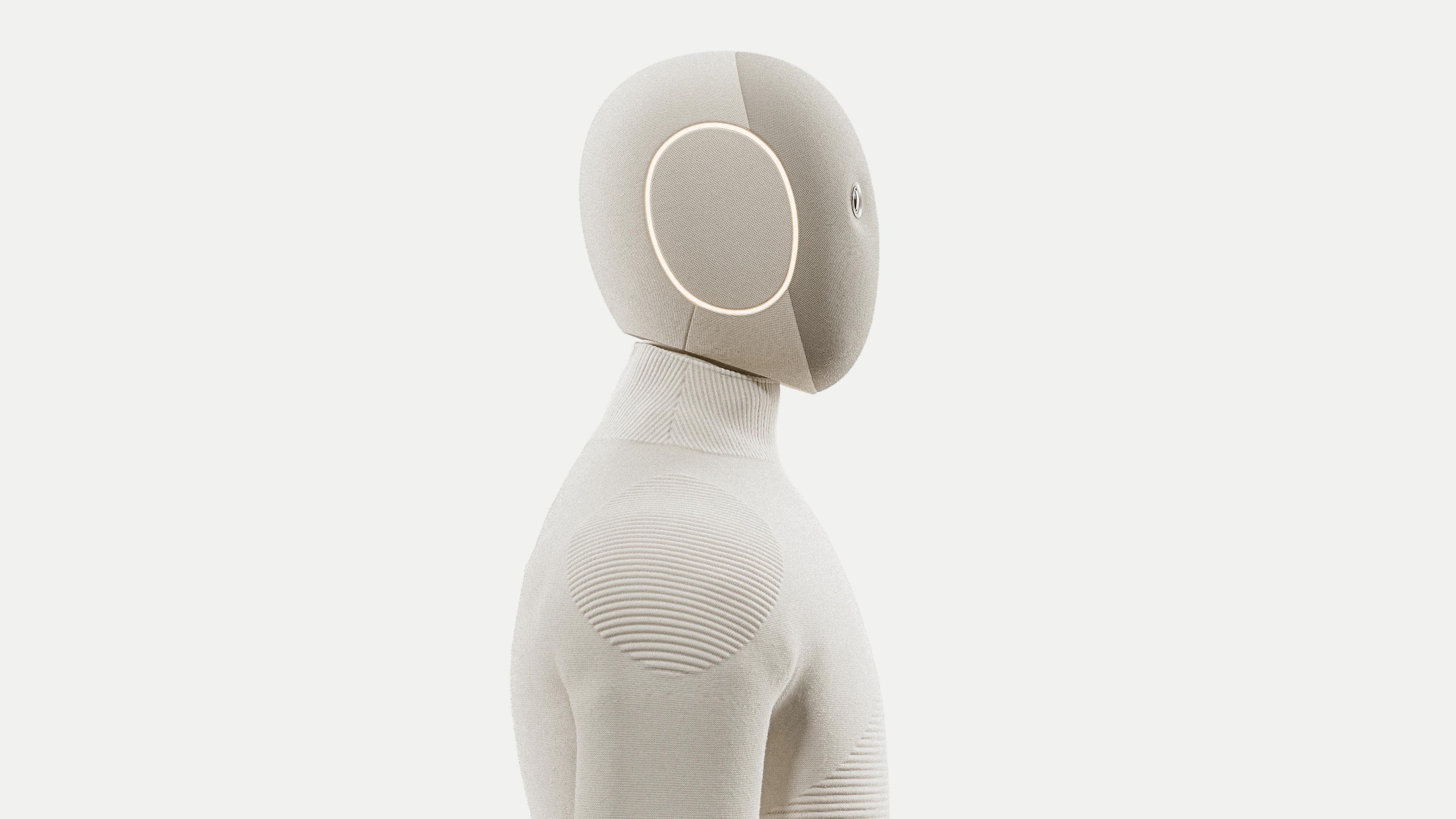
1X is positioning NEO as a home robot, not just a lab platform. Image links to 1X's NEO order page.
Key Stats
25
Degrees of Freedom
22
Finger and Palm DOF
3
Wrist DOF
IP68
Claimed Hand Rating
The Hardware Story
1X describes the new NEO hand as a 25-DOF, tendon-driven design with 22 degrees of freedom across the fingers and palm and 3 more at the wrist. The company frames it as "an API to the physical world," a useful phrase because it gets at the real issue: the hand is where software finally has to touch cluttered reality.
The headline number is close to the human hand's rough mechanical complexity. Humans are usually described as having about 27 degrees of freedom in the hand and wrist, depending on how the joints are counted. That comparison should not be read as human equivalence. It does mean 1X is trying to preserve enough independent movement for grasps, pinches, rotations, wrist posture changes, and compliance around irregular objects.
The more important design choice is tendon drive. Instead of placing a large motor at every finger joint, tendon-driven hands route force through cables or tendon-like transmissions. That can keep the fingers slimmer and move bulkier actuation away from the most constrained parts of the hand. It also creates control headaches. Tendons stretch, routing paths introduce friction, and one motion can subtly affect another if the mechanical design is not well isolated.
That tradeoff is why robot-hand announcements deserve more scrutiny than raw spec sheets usually get. A dexterous hand must be compact, strong, backdrivable, sensitive, durable, washable, manufacturable, and affordable. Optimizing one property often weakens another. A hand that can lift heavy loads may be too stiff for fragile objects. A hand with rich sensing may be too expensive for fleet-scale deployment. A beautiful research hand may fail when exposed to water, dust, food, cleaning products, and years of accidental bumps.
Why this matters
Most home tasks are manipulation tasks. Folding cloth, loading a dishwasher, clearing a table, using a door handle, plugging in a charger, and picking up toys all depend on hand design as much as whole-body intelligence.
What 1X Is Claiming
The official 1X post says the hands are built for near human-level dexterity, strength, safety, and reliability. Coverage from Interesting Engineering and Wired highlights the same core points: five-finger manipulation, tactile capability, tendon-driven motion, waterproofing, and a stronger path toward practical home chores.
The wrist degrees of freedom are not a cosmetic add-on. Wrist posture is often the difference between reaching an object and actually using it. Humans constantly reposition the wrist before opening drawers, turning keys, grabbing handles, holding cups, or working inside cramped spaces. A robot with a sophisticated palm but a limited wrist will still need awkward full-arm movements for jobs humans solve with small adjustments.
Tactile sensing is the other big signal. Vision can tell a robot where a cup appears to be. Tactile feedback tells it whether the cup is slipping, whether the grip is too hard, and whether the object is deforming. This is especially important in homes, where objects are not standardized like factory parts. A cereal box, a damp sponge, a soft shirt, a glass, and a pet bowl all ask for different force profiles.
The IP68 claim is also practical. In a home, hands get dirty. They touch sinks, food, bathroom surfaces, laundry, and floors. A domestic robot hand that cannot tolerate water is limited before the autonomy question even starts. A washable hand does not guarantee usefulness, but it removes one obvious barrier for kitchens, bathrooms, and cleaning tasks.
| Capability | 1X NEO New Hand | Typical Simple Gripper | Research Dexterous Hand |
|---|---|---|---|
| Degrees of freedom | 25 including wrist | 1 to 3 common | Often 15 to 24+ |
| Actuation style | Tendon-driven | Direct motor or linkage | Tendon, pneumatic, cable, or hybrid |
| Target environment | Home manipulation | Structured industrial picks | Lab tasks and benchmarks |
| Main strength | Anthropomorphic reach and object variety | Reliability and low cost | Rich manipulation experiments |
| Main risk | Durability and cost at home scale | Limited task range | Complexity and maintenance |
Dexterity Is the Hard Part of Home Robots
NEO sits in the most demanding category of humanoid robotics: the consumer home. Warehouses and factories are difficult, but they can be shaped around robots. Operators can standardize bins, lighting, workflows, object types, safety zones, and maintenance schedules. Homes do the opposite. They contain mixed objects, narrow spaces, inconsistent lighting, pets, children, clutter, liquids, reflective surfaces, and users who expect the robot to understand vague instructions.
That is why hand hardware and AI policy learning are tightly linked. A robot with limited hands needs the world simplified for it. A robot with capable hands can collect more useful training data from ordinary human environments. Every extra grasp type expands the task library. Every reliable tactile signal improves the feedback loop between teleoperation, imitation learning, and autonomous policy improvement.
1X has also been unusually open about teleoperation as part of the path to autonomy. That matters for the hand reveal. If remote human operators help NEO complete tasks, the system can gather examples of how hands should move around messy household objects. The long-term bet is that repeated demonstrations become training data, and training data becomes a gradually more autonomous robot.
The uncomfortable part is privacy. A home robot that may rely on remote assistance is not just a mobility platform. It is a camera-equipped, microphone-equipped, hand-equipped system operating in private rooms. Better hands make the robot more useful, but they also raise the stakes for permission, logs, user controls, visible teleoperation indicators, and strict boundaries around what a remote operator can see or do.
Manipulation
The hand must handle shape variation, fragile items, cloth, tools, and slippery objects without constant human rescue.
Sensing
Vision is not enough. Slip, force, contact location, and deformation have to be measured at the fingers.
Maintenance
A home hand has to survive water, dust, drops, food residue, cleaning routines, and repeated tendon wear.
The Competitive Read
The 1X reveal lands at a time when humanoid companies are separating into two visible camps. One camp is proving industrial pilots, where ROI can be measured by throughput, uptime, and labor substitution. The other is trying to make home robots feel inevitable, even though the technical bar is higher and the buying process is more emotional.
NEO's hand upgrade strengthens 1X's argument that the home robot should look and move through the world more like a person. It also gives the company a sharper technical story at a moment when every humanoid maker claims progress in embodied AI. Legs get attention, but hands decide whether the robot can do work a customer will pay for.
The competitive question is not whether 1X can make a hand move quickly in a launch video. It is whether the same hand can be made in volume, serviced cheaply, controlled safely, and used across thousands of homes with different objects and different levels of user patience. In robotics, reliability is usually where the announcement becomes a product.
This is also where a spec-heavy hand can become a liability. More degrees of freedom mean more components, more calibration, more software state, more failure modes, and more manufacturing tolerance issues. If 1X has solved those problems well enough for production, the hand is a serious milestone. If it has not, the design could be impressive and still too complex for near-term consumer deployment.
The 12-Month Outlook
The next year will show whether NEO's hands are a launch asset or a real deployment advantage. The signals to watch are specific: repeated uncut task videos, independent user testing, repair rates, tendon lifespan, real home trial feedback, privacy controls around remote assistance, and whether the hand can perform boring chores without careful staging.
For the broader humanoid market, the reveal pushes attention toward end effectors. It is no longer enough to show a robot walking, waving, or carrying a box. The industry is moving toward the smaller, harder questions: Can the robot pick up a wet sponge? Can it open a childproof container? Can it use a zipper? Can it plug in a charger by feel? Can it fail gently?
Those questions sound mundane because they are. That is the point. The useful home robot will not be judged by a dramatic entrance. It will be judged by how often it completes ordinary tasks without creating new work for the owner.
FAQ
What did 1X announce?
1X announced a new 25-degree-of-freedom, tendon-driven hand subsystem for its NEO humanoid platform, with 22 degrees of freedom in the fingers and palm and 3 at the wrist.
Why do robot hands matter so much?
Hands are the interface between physical AI and useful work. Most household chores require grip control, tactile sensing, wrist positioning, and safe contact with varied objects.
Does this mean NEO is ready for fully autonomous home chores?
No. Better hand hardware is necessary, but autonomy, reliability, privacy, maintenance, and cost still decide whether NEO can become a broad consumer product.
What should buyers and investors watch next?
Watch for long-form task demonstrations, home trial results, manufacturing volume, repair data, and clear user controls for any remote-assistance mode.
Bottom Line
1X's NEO hand reveal is not just another humanoid hardware update. It points at the real center of the home robot problem: reliable manipulation in unstructured rooms. The 25-DOF design, tendon actuation, tactile ambition, wrist mobility, and waterproofing claims are all aimed at the same target, making NEO capable enough to touch the world without making a mess of it.
The claim now needs field evidence. If the hand can survive real homes, generate useful training data, and stay maintainable at consumer scale, 1X will have advanced one of the hardest subsystems in physical AI. If not, it will still be a reminder that humanoid robotics is won less by theatrical motion than by the quiet mechanics of grasping ordinary things.