Home Robotics
1X NEO Is the First Home Humanoid That Has to Prove the Whole Category
1X is trying to turn NEO from a beautiful home-robot demo into a supported consumer product. The test is whether it can deliver useful work, safe remote assistance, privacy controls, dexterous hands, and repairable hardware once NEO starts living with people.

There are two ways to read 1X NEO. The easy version is that it is one more humanoid robot with a good launch video, a friendly face, and a long list of domestic tasks it hopes to do someday. The more useful version is that NEO is a public test of whether a humanoid can become a real home service before the underlying autonomy is fully solved.
That second version is why NEO deserves a featured look. 1X is not just showing a robot. It is showing a product line, an order page, a factory, a remote-support model, and a theory of how robots get smart enough for homes: put them near real people, let them learn from the mess, and use human experts when the AI is not yet ready.
That is ambitious. It is also exactly where the hard questions begin.
1X now markets NEO as a home robot with a $200 deposit on its order page, a previously announced $20,000 Early Access ownership path, and a $499/month subscription option. The company says first U.S. customer deliveries begin in 2026, with wider availability planned after that. It also says early owners should expect foundational autonomy rather than science-fiction independence. For tasks NEO cannot yet handle, 1X describes a Scheduled Expert Mode where a trained 1X expert can remotely supervise the robot at scheduled times so the task gets done and the robot learns.
That makes NEO less like a finished appliance and more like a hybrid of robot, cloud service, teleoperation network, and field-learning platform. If it works, it could be the bridge from demos to useful domestic automation. If it fails, it will likely fail on support burden, privacy, task reliability, or the economics of remote human help rather than on whether the robot can look impressive in a video.
The NEO Line: EVE, NEO Beta, NEO Gamma, Production NEO
1X did not start with a bipedal home robot. The company's earlier EVE platform was a wheeled humanoid torso used in industrial and service contexts. EVE matters because it gave 1X a practical data and manipulation bridge before the company tried to put a walking humanoid into homes.
The NEO line is the home bet. 1X's own timeline frames the shift this way: after enterprise deployments, the company decided that machine intelligence needed exposure to the broader context of human life, so it began building NEO for environments where robots live and learn around people.
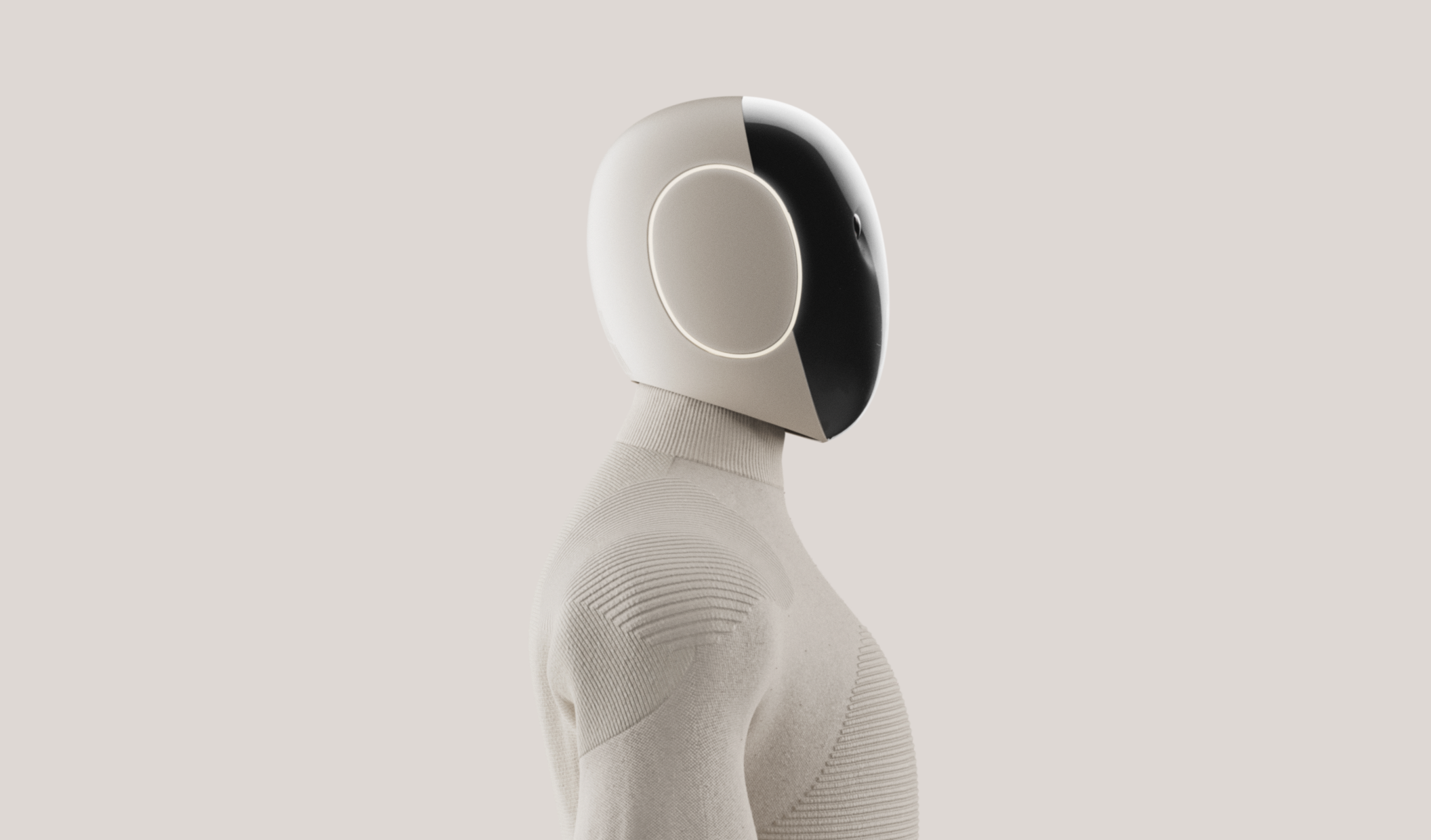
NEO Beta was the public commitment. NEO Gamma was the more consumer-shaped version. 1X says Gamma improved the domestic design, whole-body control, manipulation, audio, reliability, and home readiness. The design moved away from industrial spectacle and toward a softer visual language: knit suit, soft covers, covered joints, ear-ring indicators, and a body meant to look less threatening in a living room.
The production NEO is the version now being sold through 1X's order funnel. It is not just a robot body. It is the combination of the hardware, Redwood AI, the mobile app, voice interface, self-charging behavior, remote expert support, and the Hayward factory that is supposed to build and iterate it.
1X's NEO Gamma launch video shows the product direction: a quieter, softer, home-first humanoid rather than a factory-only robot.
What NEO Actually Claims
The official NEO page lists an unusually detailed hardware profile for a consumer-facing robot. Those specs matter because the home is hostile to bad robot design. A warehouse robot can be loud, heavy, fenced, supervised, and optimized for one workflow. A home robot has to be quiet enough to tolerate, soft enough to trust near furniture and people, mobile enough to move through clutter, dexterous enough to handle everyday objects, and serviceable enough that a broken hand or tendon does not become a customer-support crisis.
The newest detail is the hand stack. On July 9, 2026, 1X published the engineering case for NEO's new tendon-driven hands: 25 degrees of freedom per side including 22 in the fingers and palm plus 3 at the wrist, low-ratio quasi-direct-drive tendons, native force control, tactile sensing, IP68 sealing, and claimed production capacity for 10,000 hands this year. We covered that announcement separately in 1X Gives NEO the Robot Hands It Needs for Real Home Work. It belongs inside this broader NEO feature because the hands are not a side quest. They are the product's main interface with laundry, doors, dishes, cords, cups, clothing, and all the small failures that decide whether a home robot feels useful.
5 ft 6 in
Height
66 lb
Weight
4 hr
Runtime
22 dB
Noise
55 lb
Carry claim
842 Wh
Battery
22 DOF
Each hand
5G
Connectivity
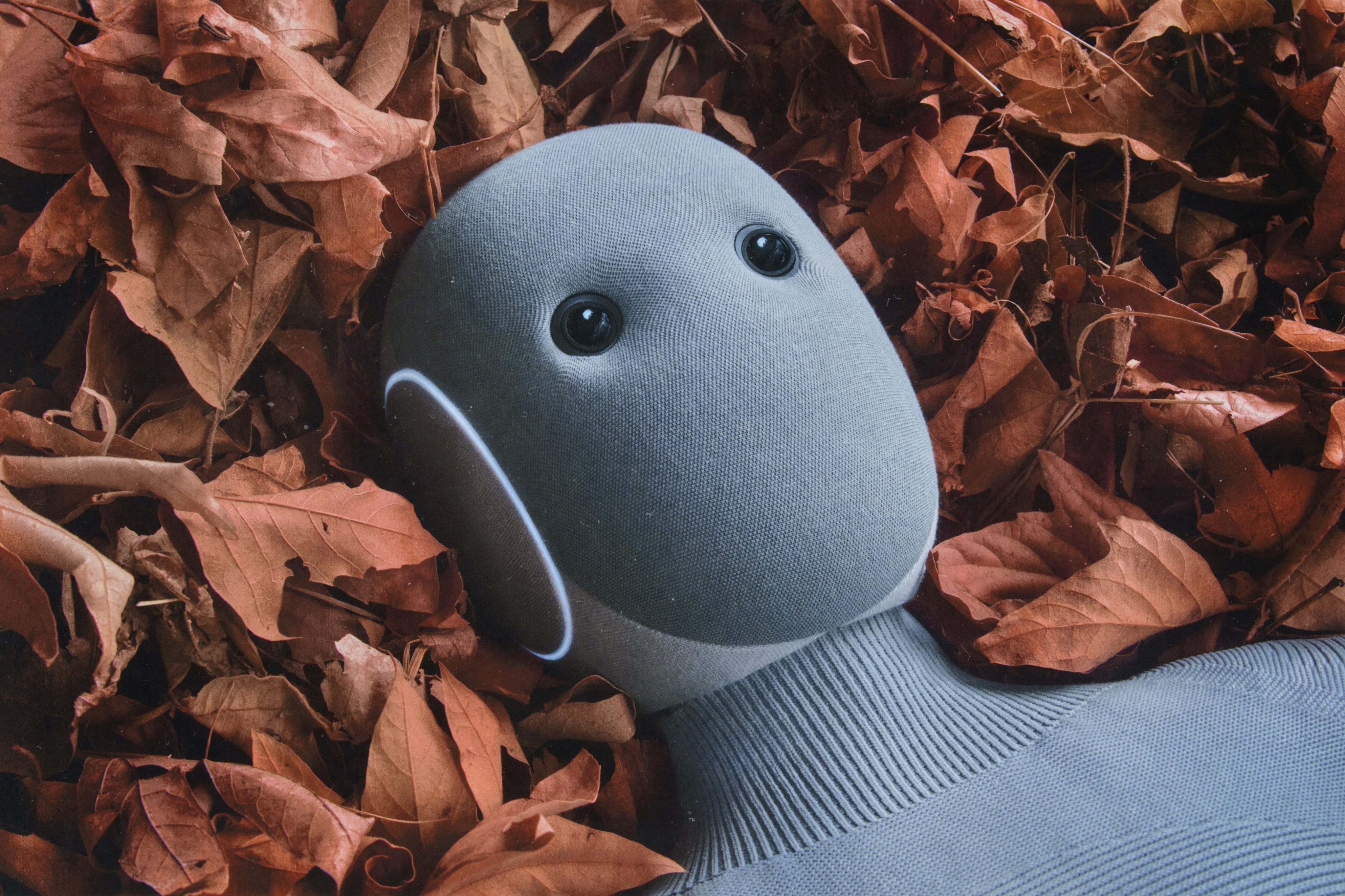
NEO's most important design signal is not the humanoid shape by itself. It is the set of choices around that shape: tendon drives, low inertia, soft body materials, covered joints, washable suit components, and domestic interfaces. 1X says the robot uses dual 8.85MP stereo fisheye cameras, four beamforming microphones, three speakers, Wi-Fi, Bluetooth, and 5G. It also says NEO can self-charge by plugging into a normal wall outlet.
Those details are not proof of safety or reliability. They are a statement of intent. 1X is not trying to make the strongest humanoid, the fastest humanoid, or the most industrial humanoid. It is trying to make a machine people can tolerate in the house.
The buyer-facing spec sheet also makes the support question sharper. NEO's hands are listed as IP68, the body as IP44, the robot at 66 pounds, the lift claim at 154 pounds, the carry claim at 55 pounds, and the core compute as a 1X NEO Cortex built around NVIDIA Jetson Thor. If those numbers survive field use, they support a serious home-hardware story. If field reliability breaks at the fingers, tendons, cameras, battery, or soft goods, the whole consumer proposition gets expensive fast.
Official video
NEO The Home Robot
This official 1X product-positioning clip includes third-party music rights that block embedded playback on some sites, so it is linked instead of embedded.
Watch on YouTubeThe official NEO home robot video is the clearest product-positioning clip: chores, voice interaction, app scheduling, and a consumer service wrapper.
Redwood AI and the Real Autonomy Question
1X calls Redwood its generalist AI model for NEO. In the company's description, Redwood is a vision-language-action model tailored to humanoid robots, trained on teleoperated and autonomous episodes from EVE and NEO, and designed for mobile manipulation tasks such as retrieving objects, opening doors, and navigating around a home.
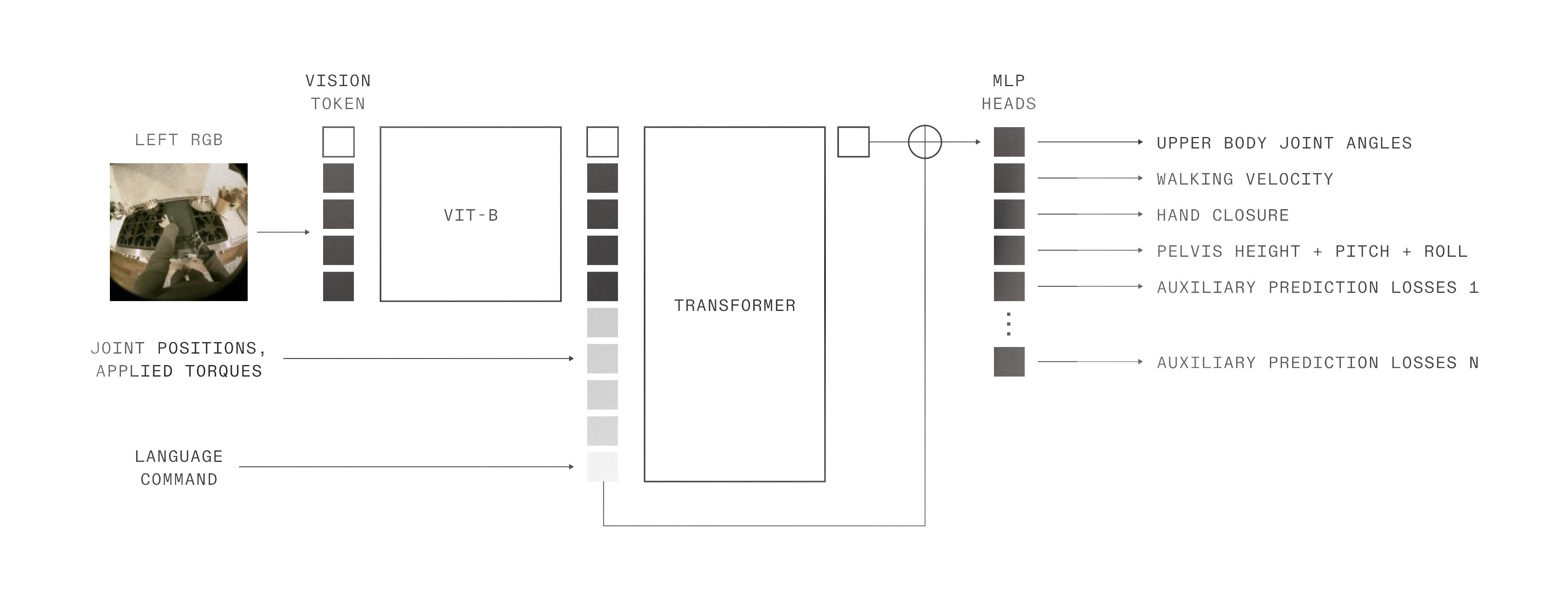
The interesting part is not that NEO has an AI model. Every humanoid company now has some version of that pitch. The interesting part is that 1X is unusually open about the need for real homes, human help, and progressive learning.
Homes are not warehouses. They are inconsistent, personal, and full of edge cases. Cups move. Pets appear. Floors change. Medication bottles, walkers, laundry piles, cords, stairs, rugs, and low light all create failure modes that do not show up cleanly in a demo room.
That is why 1X's Scheduled Expert Mode may be the most important feature to watch. It is a practical admission that early NEO will need help. The question is whether remote assistance becomes a training bridge or a permanent cost center.
For elder caretaking, this distinction matters even more. A robot that can bring water, pick up dropped objects, open a door, support video check-ins, and help with light chores could be genuinely useful. But a robot that requires too much scheduling, too much supervision, or too much camera access could become another burden on the caregiver.
The official Redwood AI video shows 1X's autonomy thesis: train a model on robot experience, then use it for mobile manipulation in the home.
The Factory Is the Other Half of the Story
In April 2026, 1X announced that its NEO Factory in Hayward, California had entered full-scale production. The company describes the site as a 58,000-square-foot vertically integrated humanoid factory with more than 200 employees. It says Hayward and a San Carlos facility coming online later in 2026 give 1X capacity for up to 10,000 NEOs per year, with planned automation increases aimed at 100,000-plus annual units by the end of 2027.
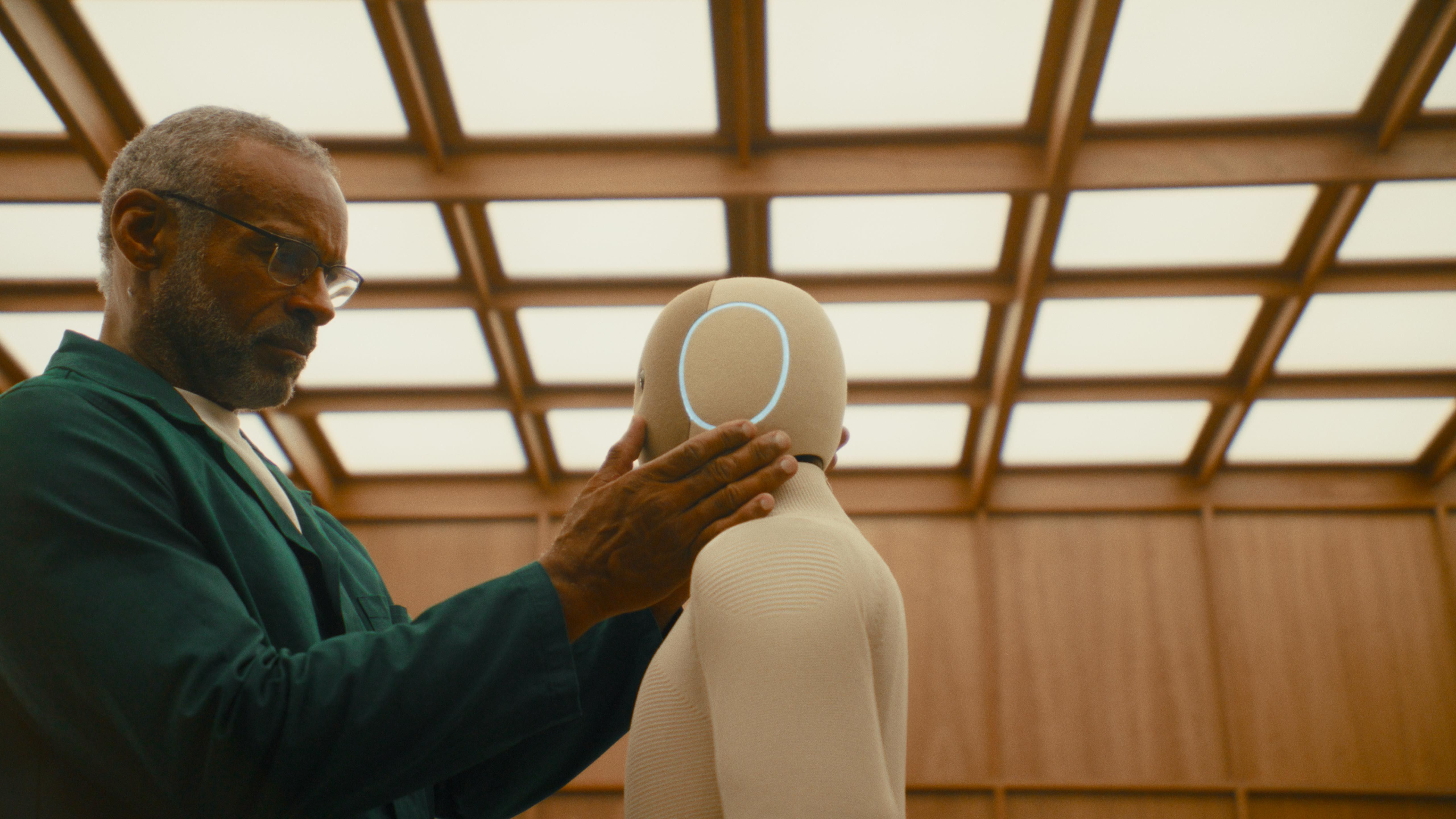
Those are big claims. They are also the right claims to interrogate.
Home robots will not be judged only by capability videos. They will be judged by delivery dates, install process, uptime, repair rates, broken fingers, battery degradation, software update quality, operator training, and whether customers keep paying. A factory video is not proof of those outcomes, but it is a more serious artifact than another clips package.
The Hayward story also changes the competitor comparison. Tesla has manufacturing scale but has not launched a consumer Optimus product. Figure is focused more on industrial and logistics paths. Unitree is compressing price from a different direction. Weave's Isaac 1 is narrower and cheaper, built around chores like laundry and tidying. 1X is trying to occupy the broad consumer-humanoid lane first.
That is a high-risk lane. It is also the lane that would change the public meaning of humanoid robots fastest if it works.
The Hayward factory footage is the current best look at 1X's attempt to move NEO from prototype to manufactured home robot.
The Privacy Problem Is Not Optional
A home robot sees the most private version of a household. It may see medication, finances, mobility limits, family routines, visitors, children, arguments, pets, doors, locks, and medical equipment. For elder care, the sensitivity rises again.
That is why NEO's remote expert model needs more scrutiny than a normal robot support feature. Scheduled remote help could make the product useful years before full autonomy arrives. It could also make the product feel too invasive if households do not understand who can connect, what they can see, what gets recorded, how consent works, and how data is retained or used for training.
What needs proof
A home humanoid has to prove more than task competence. It has to prove consent, privacy, operator access limits, reliable emergency behavior, and clear control for caregivers and residents.
Before NEO is treated as an elder-care tool, the checklist should include whether residents can approve or deny every remote session, whether family caregivers can audit session logs, whether cameras and microphones are disabled outside scheduled work, how consent works for cognitively impaired residents, how expert operators are trained, and what household data is used for model improvement. 1X's public FAQ explicitly raises the right questions around Expert access, autonomy, data sharing, operation, and data use. The next step is independent verification of those answers in occupied homes.
The home robot category will not earn trust by saying privacy matters. It will earn trust by making the controls obvious.
The Evidence to Watch Next
The most important NEO evidence will come after units leave controlled company settings. The useful questions are practical: how many tasks finish without intervention, how often Scheduled Expert Mode is needed, how long setup takes, how quickly the robot recovers from failed grasps, and whether customers still find it useful after the novelty period.
For residential and elder-care contexts, the evidence bar should be especially high. A helpful home robot might fetch objects, support telepresence, open doors, handle light tidying, or reduce caregiver burden. But it should not be treated as a medical device, medication manager, fall-response system, or substitute for human care unless 1X and independent reviewers can prove those boundaries clearly.
Useful work
Repeated task completion, object retrieval, tidying, laundry-adjacent help, door workflows, and whether performance improves after the first few weeks.
Human burden
Setup friction, intervention minutes, scheduled expert minutes, caregiver workload, resident acceptance, and how much supervision the robot actually needs.
Safety and reliability
Failed grasps, dropped objects, near misses around pets, cords, stairs, rugs, walkers, battery cycles, self-charging reliability, maintenance events, and support response time.
Privacy controls
Remote-session consent, camera and microphone behavior, operator visibility, data retention, caregiver audit logs, and clear opt-outs for training data.
The right scorecard is not "Can NEO do a cool thing once?" It is "Does NEO make a household easier to run after week eight?"
Independent hands-on coverage is useful because it shifts the evidence from product video to real interaction, hesitation, and early limitations.
Why NEO Could Matter Even If It Starts Imperfect
Early home robots will be awkward. That is not a reason to ignore them. It is a reason to evaluate them honestly.
If 1X can ship NEO into homes, support it, improve it, and keep the remote-assistance burden under control, it will have done something the humanoid category badly needs: create a real feedback loop outside factories and labs. Real homes generate the data that polished demos avoid. They also expose the customer-service problems that robotics startups often understate.
NEO's best-case path is not instant general intelligence. It is gradual usefulness: a robot that begins with a narrow set of chores and presence features, leans on scheduled expert help for difficult work, then improves through repeated household exposure.
That path is less magical than the marketing version. It is also more believable.

Bottom Line
1X NEO is not just another humanoid robot announcement. It is a bet that the first credible home humanoid will be a supported service before it is a fully autonomous appliance.
That makes NEO one of the most important robots to watch in 2026. The hardware is unusually home-focused. The factory story is unusually concrete. The price is public. The remote expert model is honest enough to be useful and sensitive enough to demand scrutiny.
The next question is simple: can NEO become helpful in ordinary homes without making those homes feel like test labs?
That is the question the next phase of home robotics has to answer.